I love the Irish art from the animators of The Book of Kells and Song of the Sea is their latest release. I am a fan of John Sayles’s 1994 movie, “The Secret of Roan Inish,” about the Irish legend of a Selkie, seal-like creature that can shed its skin and live for a time as a woman. I am fascinated by the assumptions in Irish stories because it helps me understand some of the assumptions I make about life.
The two kids and dog pictured left live with their father in a remote lighthouse on the roaring Atlantic shore of the island. The mother has disappeared and no one is talking. Even the little six-year-old girl, Saoirse, doesn’t speak. No one mentions that Selkies can’t speak without their seal skin. The only connection the family has to other people is that the father goes to the mainland to visit the pub when his mother comes to visit the children. There is almost no adult conversation in these children’s lives, and no recourse when adults make bad decisions.
So, we have three elements of Irish culture:
- Isolation
- Not talking about losses as large as a missing mother
- Going to the pub for companionship and emotional relief
Things get worse, the grandmother comes to take the children to the mainland, but she won’t take the dog. The kids make their break on Hallowe’en, when all the goblins are out, including the evil owls that do the dirty work of Macha pronounced Maka. When Macha gets hold of the kids and the dog, lo and behold, she looks a great deal like the grandmother.
Macha wants to ease their pain and loneliness by turning their emotions to stone, as she did for her son, the giant stone near their light house. Her son was so sad he cried an ocean of tears, and to take away his pain she turned him, and his emotions, to stone. The emotions are now rocks with magical markings, and some are captured in unbreakable jars. So, more Irish culture:
- The way out of pain is to turn to stone
- It is good to help someone to turn their emotions to stone
- This change a permanent
In order to make his own life easier, the father has made bad decisions with dangerous consequences for his children. The boy, Ben, risks everything to save his sister Saorise (pronounced like the color Cerise).
The movie, and the legend, seem to teach that the right thing for children to do is to give up their lives for others. To accept without question that their mother has disappeared and their father cannot made good decisions, cannot take care of them, and doesn’t have to answer urgent questions.
But wait, it gets worse! And the very end, the little girl is forced to make a choice that no six-year-old should face. She has to choose between being true to herself and embracing the adventure of her true nature by joining her mother, or she can choose to take care of her weeping father and brother. And guess what she chooses?!
That’s right… she chooses to take care of her father and brother because her mother CAN’T. And her mother disappears again, this time forever. So the little girl will now spend the next 10 years taking care of these men, and trying to push out of her mind her brief connection to her mother. She has learned to put herself last.
And that’s how co-dependents are created. This is the mythology of my culture. These are the stories we tell the children.
Nathaniel Branden said, “We live our lives according to what we believe.”
Maybe it is time for my barbarian culture to evolve. Maybe it is time to develop some healthier traditions, including telling the truth to the children. And wouldn’t it be grand if parents could actually take care of themselves and take care their children? Not the other way around…
 Ten years ago, when I started my business, I knew more than anyone else in Santa Rosa about how to increase revenue for a brick-and-mortar business by using Google advertising. To help these businesses, I used my extensive background in marketing and advertising, and my expertise in media buying, along with my web development skill. The oldest “digital natives” were about 15 and still in high school.


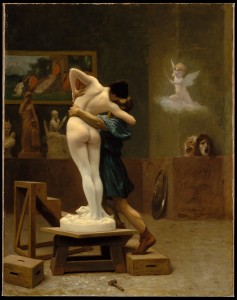 Barbara Hayes lent me her copy of Playing Pygmalion: How People Create One Another by Ruthellen Josselson. I finally finished it the weekend I went camping by myself. It was hard to read because the writing was terrible (see excerpt below) and because the copy I had was heavily marked up in black pen with underlines, circles and stars by the previous owner of the book, not by Barbara. This excerpt from page 137 is footnoted (12) which indicates that this theory is also found in Dicks (1962) Scharff (1991) and Sander (2004).