Olompali State Park Hike

Hip Chicks Spring Flower Hike Olompali – Miwok Village – Wooden Teepees Marked

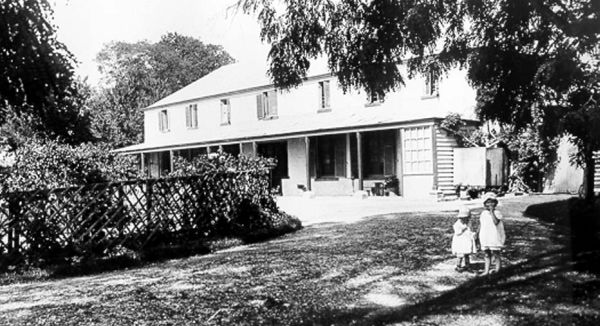
Patti invited wildflower specialist Elizabeth Sanders to lead us on a 3.3 mile hike in Olompali State Park with a 600 foot elevation gain and loss. We hiked from 10 to 12:30 pm with lots of stops for photos and flowers. Group shot was in Miwok Village. I photobombed as Patti shot the explanatory sign. Notice the wooden tee-pees in the background.
Toward the end of the hike, as we were waiting for stragglers to catch up, Beth Power was the first around the bend. I took this wide shot and created a detail of it.


Quiet Coup by Mehrsa Baradaran

Interesting ideas flagged
The blue paper flags in The Quiet Coup mark jarring insights by Mehrsa Baradaran, a professor of law specializing in banking law at UC-Irvine. This searing indictment of the theory of “Law and Economics” is subtitled Neoliberalism and the Looting of America. Neoliberalism is a blanket term that describes
- market-driven,
- state-enabled
- deregulation that prioritizes
- capital mobility and
- privatization of commerce
- rather than prioritizing the public good.
The conclusion on page 349 points to the utter failure of the promises of neoliberalism:
- increased market competition
- more opportunity for all
- fewer taxes going to wasteful government spending
- and more liberty to pursue our own dreams
Money doesn’t Trickle Down — It Flows Up
In an unfettered market, capital multiplies. The rich get richer and the poor get poorer.

Reaganonomics
Supply-Side Economics
Voo-doo Economics
To combat the stagflation in 1980, presidential candidate Ronald Reagan touted “supply-side economics” promising that it would incentivize production and investment by deregulation, and lowering government spending and reducing taxes. George H.W. Bush correctly dismissed this as “voo-doo economics” because he understood that removing safeguards increased the “speed of greed.”
Regulations protect the citizens and small businesses upon which this economy is founded. Lowered government spending slowed growth. Reducing taxes on corporations increased the paychecks of CEOs but not the W-2 workers.
Trust is the Basis of Currency, Banking, and Society
Professor Baradaran points out that the value of any currency is simply that people believe it is worth something. Banking only works if people believe that they can get their money out when they want to. Social order is based on trust and it crumbles in riots. She says on p. 350
Neoliberalism taught us to distrust the state and one another… We are tyrannized by both a bloated government bureaucracy and a cannibalizing capital market: the guys who buy the guns, and the guys who sell them.
The past twenty years have shown us that humans are not the rational, self-interested decision-makers that Professor Milton Freidman claimed. Market behavior is not rational — it is driven by emotion. The strongest of these is the Trust/Distrust axis. On p. 351 she says,
We evolved as community builders, and our greatest feats have required groups of humans to work toward a common goal for long periods of time. Turning polarities into harmony — that is the magic of humanity. It is TRUST that is the vital force underlying both state and market. And corruption is the death knell of both.
Harmony – What If Democracy Is a Song?
“Turning polarities into harmony — that is the magic of humanity.”
Since the runaway inflation of the 1980s turned into “stagflation,” the electorate has ping-ponged between candidates who promise lower taxes and regulation, and those who promise to tame greed, corruption and inequalities. I think Professor Baradaran is right, these are different notes to the symphony of democracy and it would make better sense to find a way to harmonize.

Neoliberalism is a zero-sum mentality stuck in 19th-century laisex-faire economic ideas. On p. 352 she points out that “Segregationists, wealthy heirs, big-oil and tobacco are trying to preserve an unjust world economic order.”
Can we find a way to harmonize creativity, ambition and greed with “the greatest good for the greatest number”? What if a robust economic system is not a balance or a paradox. What if it’s a harmony. Can we find a way to hear all the voices?

Milton Friedman
Other voices in the harmony are academics. For example, the Chicago School of Economics Nobel Prizewinner Milton Friedman seemed to sing “Nothing is as permanent as a temporary government program.” He believed government regulation slows financial growth. On p. 85 Professor Baradaran said, “Friedman was not alone in his crusade against corporate responsibility… Shareholder supremacy took hold of the Delaware courts over the next decades…”
Chairman of the Federal Reserve Alan Greenspan would sing “A free market is self-regulating and derivatives are trivial. Get rid of rules.” Famous for his inscrutable testimony, he believed that the self-interest of free markets and banks would adequately regulate them. When investment banks Bear Stearns and Lehman Brothers failed in 2008 and nearly brought down the world banking system, Chairman Greenspan famously admitted he was wrong. This was during a House Committee of Government Oversight and Reform hearing on October 23, 2008.
Greenspan and Friedman could have been right, back when investment banks they were run by partners who decided the risk and return of each investment. They were using their own money. After President Jimmy Carter deregulated banks, firms like Goldman Sachs went public in 1999. Now they were corporations instead of partnerships and they were investing the corporation’s money: other people’s money. They paid themselves fees, so transactions were rewarded and Mergers and Acquisitions exploded. Leverage borrowing was the fuel that burned down the markets in 2008.
There will always be the voices of the greedy seeking to unshackle themselves from the regulation that impedes their fleecing of investors.
Greenspan and Friedman did not take into account the greed of bankers who were no longer working in partnerships, who were no longer investing the partnerships’s money. To correct this after the 2008 crisis, the Dodd-Frank bill was signed in 2010 by President Obama to place safeguards in banking. It was partly repealed by President Trump in 2018.
I can’t help but wonder if some of this greed is stunted development. Psychologists tell us that before age 3 toddlers engage in side-by-side play rather than cooperative play. Toddlers are learning what belongs to them (“mine!”) and they lack the ability to understand what others want. They engage in side-by-side Parallel Play and might be encouraged to take turns during a game, but toddlers usually don’t understand sharing in the sense of giving up the toy and then getting the toy back later. Regulating markets has been one way of coping with this behavior in adults.
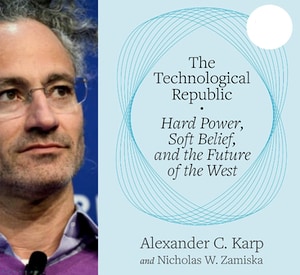
There is also the question of mild autism like Asperger’s, an inability to understand that others have needs and that society expects adults to help out those who have less. Elon Musk announced his Asperger’s on Saturday Night Live, and Bill Gates, now famous for his Epstein friendship, is also said to be Asperger’s. Alex Karp, co-founder of Palantir, said during a NYtimes panel that he has Asperger’s. This limitation affects their business decisions.
For the craving for money is the root of all sorts of evils. [1 Timothy 6:10 New Testament]
Radix malorum est cupiditas The root of evil is cupiditas -> greed
The Law of Unexpected Consequences
Ralph Nader unwittingly set the groundwork for Citizens United
In 1976, Ralph Nader won a consumer rights case before the Supreme Court which established First Amendment protection for commercial speech by ruling that Virginia’s ban on advertising prescription drug prices was unconstitutional. It upheld Ralph Nader’s contention that the free flow of commercial information is vital to the public. Virginia State Board of Pharmacy v. Virginia Citizens Consumer Council, Inc. This was the change of precedent that led to the travesty of Citizens United in 2010.
Citizens United v. Federal Election Commission held that the First Amendment prohibits the government from restricting independent political expenditures by corporations, unions, and associations. Corporate lawyer Lewis Powell sent a memo in 1971 to a friend who was the chairman of the U.S. Chamber of Commerce. Titled “Attack on American Free Enterprise Systems” it was “full of practical strategies covering a range pf issues, making it one of the most significant documents of the neoliberal revolution in America” p. 85. This was part of the formation of the Federalist Society, covered in Chapter Five, with founding members from the Olin Corporation and industries most threatened by changing markets: big oil, tobacco and weapons.
Lewis Powell went on to become a member of the Supreme Court and was a leader in shifting the decisions from what was best for the people to what was best for the corporations and markets. He was proud of his achievement of keeping black children out of white classrooms in Virginia — de facto segregation.
The Paradox of TIAA-CREF
TIAA-CREF is the leading financial advisor for more than five million teachers, firefighters, police officers, hospital workers, college professors, and people who walk across a variety of public sector jobs. The five million people are part of the disappearing middle class whose jobs and lives have been eroded by the efficiency-minded logic of the financialized neoliberal economy.
TIAA-CREF is a big capital reservoir of middle-class pensions that is invested like any other Wall Street portfolio: maximize returns. Worker’s retirement savings were fed into the same financialized market that squeezed empathy out of hospitals and turned them into businesses. On p. 349 Professor Baradaran says, “Neoliberalism’s trick was to enable a privileged few to cheat the market, loot our shared resources, and seize the ladders of opportunity.” The market is neither Divine nor Evil; it is an algorithm designed to maximize return-on-investment, making the rich richer and the poor poorer.
Integrity is Expensive but it is Not a Luxury
At the Munich Security Conference in February 2026, Representative Alexandria Ocasio-Cortez spoke about the intersection of economic inequality and the rise of far-right populism. She challenged the elite, pro-establishment conference attendees, arguing that runaway inequality fuels far-right populist movements. The security of the individual erodes as power and wealth become increasingly unequal. One threat is the power of surveillance as it becomes concentrated in fewer entities, often corporations like Palantir rather than elected governments.
On page 359 Professor Baradaran states:
I now believe that for those of us fighting for economic justice, it is time to look toward the MARKETS for solutions, because now money has more rights than voters,
and corporations have more power more than governments…The neoliberal coalition did not want trade on fair terms, so they rigged the game.

Mehrsa Baradaran
Professor Baradaran contends that the neoliberal push to turn people into “entrepreneurs of themselves” is deluded and serves commerce rather than society. To insist that every American is solely responsible for their own success or failure is delusional. As a society, we must do more to provide education to anyone eager to study because a robust democracy is stabilized by voters who are able to think and who can make the effort to understand the many sides of complex issues.
Mehrsa Baradaran was born in Iran where her mother was imprisoned for political protest. Upon her mother’s release, they emigrated to the US when Mehrsa was about 8 years old.
Julia Child at Napa Valley MAC
Joined my OLLI-Art friends at the Julia Child show at the Napa Valley Museum of Art and Culture.

It takes an hour to drive to here on winding St. Helena Road

We took a bath with Julia and Paul Child.

Julia’s TV set with my friends on camera, displayed below the cooktop.

Photobombing Jonathan – visible on camera below. Jonathan wields “Jacques Couteau”
Mokyr: the Lever of Riches

I spent most of Sept, 2025 in Belgium in an effort to understand why the Industrial Revolution seemed to bypass Catholic Ireland while Protestant England got rich. This question formed as I listened to 180 episodes of The History of the Germans podcast. Addressing that question directly seemed too painful so I reframed it as “why did the Dutch Protestants get rich and the Dutch Catholics stagnate after the 30 Years War?”
The Thirty Years’ War, fought primarily in Central Europe between 1618 and 1648, was one of the most destructive conflicts in human history. An estimated 4.5 to 8 million soldiers and civilians died from the effects of battle, famine, or disease, with parts of Germany reporting population declines of over 50%.

The trip helped me to understand that the reasons were complex and included Corruption, Capital, and Contracts. Shortly after I got home, Joel Mokyr was awarded 50% of the 2025 Nobel Prize in Economics “for having identified the prerequisites for sustained [economic] growth through technological progress.”
Joel Mokyr used historical sources as one means to uncover the causes of sustained growth becoming the new normal. He demonstrated that if innovations are to succeed one another in a self-generating process, we not only need to know that something works, but we also need to have scientific explanations for why. The latter was often lacking prior to the industrial revolution, which made it difficult to build upon new discoveries and inventions. He also emphasized the importance of society being open to new ideas and allowing change.
I promptly read Mokyr’s book “The Lever of Riches” (1990). He likes to point out that, before his innovative reading of economic history, people tended to quote Adam Smith about how countries and cultures got rich..

Moktyr described his contribution as the requirement for Useful Knowledge (this is Mokyr’s slide). Inventors needed to understand the science behind the technology (like how steam engines work) in order to develop things like the four-stroke engine or the hot air balloon. Metallurgy was needed in addition to knowledge of printing to develop the alloy that allowed movable type. Creating colorful dyed fabrics required understanding chemistry and developing aniline dyes.


Antwerp/Ghent/Bruges in Belgium was the fine fabric capital of the world in the 1500s
Moktyr’s “Gains from trade before the Industrial Revolution” in the slide above meant real goods, traded in person. “Value added” in the 1500s meant shipping English wool up the Scheldt River to Bruges/Ghent/Antwerp where it was spun and finished into fine fabric and dyed with the organic colors available at the time. English wool was sometimes blended with French flax which the Belgian specialists could weave into luxury linen. The wool and flax fibers were processed by hand in family workshops, usually in the home. There were trade secrets passed down through families. Because all the work was at home and everyone participated, child care was not separate from paying work. Everyone took part in the family business, maintaining the home and taking care of the children.
“Good institutions” in the slide above meant that the Guilds were strong and the cities operated with much autonomy from the sometimes-changing monarchies that claimed them. Taxes meant that merchants carrying wool from England weren’t dinged at every town they passed on the Scheldt River on their way to Antwerp. “Peace” is crucial for stable market-building and the refinement of fiber processing to looming into fabric and the production of goods for sale.
Peace collapsed in 1618 with the start of the Thirty Years’ War over territory and religion which forced the Dutch-speaking Protestants and Sephardic Jews out of Spanish Hapsburg Catholic controlled Antwerp/Ghent/Bruges to Dutch-speaking territory in the North, Amsterdam, which in 1600 was a little fishing village at the bottom of a bay that opened to the North Sea. The Dutch protestant fisherman knew how to build boats that could travel the North Sea. The weavers and merchants needed to get their goods to market, safely bypassing the wars on land. They needed bigger boats and the money-lenders could provide the capital to build them. But would the merchants pay back the loans, or simply kill the money-lenders as the Catholics tended to do in Southern Belgium?
Wikipedia “Reformed Christianity” observes:
Calvin expressed himself on usury…when he criticized the use of certain passages of scripture invoked by people opposed to the charging of interest. He reinterpreted some of these passages, […] saying that money should be lent to people in dire need without hope of interest, while a modest interest rate of 5% should be permitted in relation to other borrowers.
As the wars continued and millions died in these small countries, millions more fled the countryside. Those with skills, ambition and the “Protestant Work Ethic” of discipline, diligence and frugality prospered in Amsterdam. Plundering soldiers destroyed farms which were then lost to “enclosure” by aristocrats who simply expropriated the farmland. Eventually there were no farms or villages for displaced people to return to so the merchants expanded outward, eventually colonizing the New World in search of riches.
Riches, money, capital became the new goal. Max Weber observed that good fortune from hard work was seen as a vindication of God in one’s life. Protestant Capitalists came to believe that profitable actions were blessings from God that proved their right to possess even greater wealth. Some Capitalists took this to the extreme of pursuing unlimited wealth through colonization, slavery on plantations and in mines, wiping out South American natives with disease and stealing their gold and silver, eradicating Mayan documents, artifacts, and culture, etc.
On page 176, Mokyr refers to Marx’s famous dictum that his purpose was not just to understand the world but to change it. Mokyr says that this value applied to “thousands of tinkerers, mechanics, and engineers who built the windmills, clocks and fully rigged ships of medieval Europe.” This pursuit of functional improvement was seen in commerce, war, and politics was decisive. European pragmatism in this period far outstripped most non-European societies, according to Mokyr.
Corruption, Capital, Contracts
As the Reformation changed religion from the old medieval Corrupt (selling of indulgences, the sin of Simony, clerical concubines, etc) to the pursuit of Capital, we should also look at Contracts. Mokyr says that Patent systems did not emerge until the fifteenth century and turned out to be a double-edged sword for inventors (p.177).
“What is clear is that between 1750 and 1850 the British political system unflinchingly supported the winners over the losers, on both matters of technological progress and, increasingly, free trade. On the eve of the Industrial Revolution the British ruling class had most of its assets in real estate and agriculture; it had no interest in resisting the factory and the machine. (p.256)
The British ruling class had grabbed most of the land, forcing the peasants into cities where factories were starting up. Patent and commercial law developed favoring the merchants taking financial risks to develop mechanical looms and factories. The land-owning aristocrats did not interfere with the bourgeois legal proceedings in patents and contracts. Scot James Watt (steam engine) and Englishman Richard Arkwright (water-powered cotton spinning) became famous and wealthy men. “As the technology of building roads and canals improved in the 1700s, Britain became an integrated market system. p. 245”
In 1600s Catholic Belgium there was tremendous resistance to mechanical spinning and looming which displaced generations of Belgians who had created luxury hand made fabric with poor quality and much cheaper woven goods.
“After 1760, guilds came under pressure in France and Germany, and were abolished in 1784 in Southern Netherlands. The French Revolution abolished them in France in 1791 and subsequently in areas that fell under French domination. By 1815 the guilds had either been fatally weakened or abolished altogether on the Continent. … However, the Revolution’s long term effect was to clear up the debris of the ancien régime on the continent, thus assuring Europe’s ability eventually to follow Britain in revolutionizing its productive systems. (p.259)”
Yet, even Britain, the cradle of the technologies that created the Industrial Revolution lost its preeminence in the late 1800s and early 1900s due to resistance to change by entrenched businesses and the rise of technical universities in Germany and Netherlands.
The other 50% of the 2025 Nobel Prize in Economics went to Philippe Aghion and Peter Howitt for creating a mathematical model in 1992 for what is called creative destruction, yet Mokyr mentions it on page 261 as a crucial component of continued creativity. The Nobel Prize committee went on to say:
“When a new and better product enters the market, the companies selling the older products lose out. The innovation represents something new and is thus creative. However, it is also destructive, as the company whose technology becomes passé is outcompeted.
In different ways, the laureates show how creative destruction creates conflicts that must be managed in a constructive manner. Otherwise, innovation will be blocked by established companies and interest groups that risk being put at a disadvantage.
“The laureates’ work shows that economic growth cannot be taken for granted. We must uphold the mechanisms that underly creative destruction, so that we do not fall back into stagnation,” says John Hassler, Chair of the Committee for the prize in economic sciences.
On page 298 Mokyr makes a key parallel between evolutionary biology and human creativity: they happen both with big mutations like the primate divergence from 48-chromosome apes to 46-chromosome humans, and in small mutations like skin color to compensate for levels of sunshine. Both are necessary, valuable, and sometimes hard to cope with. I would add one biological note: in order for people to learn and innovate, they need to be relatively safe and relatively calm.
My favorite line in the book is from page 164 where Mokyr says,
“Why were the Dutch so much more adept at sea than, say, the Irish? And why did Portugal after 1500 fail to develop spillover effects similar to those of the Netherlands?”
I Won An Award!

I just won an award on Facebook from the podcaster “History of the Germans” who recently broadcast his 200th episode. I am only on episode 180.
Growing up in post WW2 NYC, my babysitter was the TV. It would be more than 20 years before Sesame Street was invented to give children something more wholesome than WW2 propaganda movies that ran in daytime TV. The terrifying war movies indoctrinated me to fear Germans. My European travel had been limited to Catholic France and Catholic Italy and the art I saw was mostly Crucifixions, Madonnas and Martyrs. I had been trained to believe that Heresy was a mortal sin and Martin Luther the Heretic was burning in Hell for Eternity. I was stunned when I saw, in a brief stop-over in Frankfurt a couple of years ago, a painting of Martin Luther that lionized him as if he were Washington Crossing the Delaware.
When I got back from Belgium in late Seeptember 2025 I posted this to the Facebook page for the podcast and the (!) podcaster wrote back to me!

Facebook Post to History of the Germans Podcast Page
I got a “heart” reply to the comment about German portions and the badge. 😁
Mistakes Can Be Catalysts
Fear of making a mistake can be paralyzing, especially when a big decision looms. During my two-week visit to Portland in January-February, I promised my relatives I would buy a reliable car that could capable of the Siskiyou pass on I-5 between California and Oregon. My Volvo had been unsuccessful in the attempt.
After test driving a CyberTruck, a classic-looking VW Buzz electric bus, and an Ionique6, I realized that the tax rebates for electric cars were likely to evaporate without notice and decided to get the best car I could that qualified so I kept checking the websites for it to appear. On Wednesday 14 May, there it was and I put $500 down on a low-mileage 2022 Tesla Model 3. I download the required Tesla app, uploaded images of my driver’s license and car insurance, and made an appointment to pick up the car in Colma in two days. I began planning how to get myself to Colma.
The next day I went to the gym for my regular class and came home for a short nap, only to be awakened by a nightmare that the order had crashed.
I called Tesla customer service and was assured that all was well. A couple of hours later my app indicated that my appointment had evaporated. I called Tesla again, a little before 7 pm and was told that the order had been cancelled and the car was back on the market. Tesla had been texting with an unverified phone number ending in 2636 (not my phone number) and that person, instead of saying “wrong number” said “cancel the order.” Canceling forfeits the $500 order fee.
While still on the phone I checked the website and there it was! Hastily, I bought it again, even though the price was higher — too high to qualify for the tax rebate.
Oops… wrong car. I was switching screens to compare VIN numbers between what I had ordered and current availabilities. The first 8 digits were identical to the car I just bought, and of the first 12 digits, 11 were identical. It was late in the day and I was deep into this mistake so I found and re-bought the car from the day before. Now Tesla had deducted the $500 purchase fee three times from my bank account and it is close to 8 pm.
Friday, instead of going to Colma as planned, I went to the Tesla showroom in Santa Rosa to speak with a manager. He was in Corte Madera at the other dealership so I was ushered into the waiting room for his call. Rob Watkins listened patiently, told me that my car was $1 more than the qualifying price for the tax rebate, and asked me to wait. He called back saying a Used Car Sales Manager would call me by the end of the day to straighten things out.
The call came the next morning, Saturday, at 8:30 am from Christian Rodriguez who was calling from NYC. I told him of the odyssey that getting to Colma would require and he suggested the 3:40 ferry and Tesla providing an Uber to a 4:30 pickup time. The good news is that my car DID qualify for the tax rebate, the bad news was that the tax rebate has to be embedded in the purchase link to be activated. On Monday at 10:30, Chris was back in Fremont, the link was generated, I bought the car AGAIN (now four $500 purchase charges deducted from my bank) and set off for Colma. I had checked out regular taxis and realized that trying to get reimbursement from Tesla for an Uber was not something I wanted to go through.

Walking from Ferry to BART
I drove my Fiat to the SmartTrain and took the 1pm train to Larkspur and walked to the ferry, arriving in SF at 3:40pm. This giant woman greeted me as I walked to the Embarcadero BART station. Thirty deafening minutes later I was in Colma and walked to the taxicab stand for a ride to the dealership. I was astounded to learn there are taxis available at many BART stops including Daly City and Millbrae.
When I picked up the car I was thrilled to learn they had deducted the tax rebate from the amount due. I drove home through SF rush hour traffic, getting home just in time to dash for the final #6 bus of the day back to Coddington Mall so I could retrieve my Fiat. I was almost as thrilled to have caught the bus as I was with everything else.

On my way to art class the next day
Buying a car online is hard and I made many errors. While Tesla requires the Email address to be input twice, the phone number goes in only once and I made a single-digit typo, putting in the incorrect 2636 number. It was improper for Tesla to cancel an order from an unverified text number. Tesla never notified me, either by Email which HAD been verified, or through the App into which I had uploaded my license and insurance information. I learned that making a mistake led to getting good help with something I was unskilled at. It helped me get the tax rebate attached at the time of sale.

Flowers for Rob Watkins
Wednesday morning, I dropped off flowers for Rob Watkins, but he was on vacation for his birthday. On Friday, the credit for all the extra car purchases reached my bank account. Now I am working on how to play my CDs on a car that expects me to stream.
Kim Winter Art Opening
The E Hotel in downtown Santa Rosa features artworks by the fabulous Kim Winter!

Kristin Hannah – “The Women”

My sister Mary Rose recommended “The Women” and commented,”When I chat with women who have read it, they’ve each mentioned something different that struck them deeply — none of which was the thing that struck me. Veddy interesting. Rye was the horrid bad guy in the whole story, in my opinion.
“You could be a hero,” he says to an impressionable young Frankie. Grrr. Those stupid words provoked her bravado so that she could impress her dad and have a place on his office wall.
Well, that certainly backfired.”
I agree that Rye, the lying cheat, was the horrid bad guy in the story. And the book blames Rye for Frankie’s decision to try to be a hero and get on her father’s “Wall of Honor.” I think it is interesting that the writer chose to make the father Irish-born, and wrote the mother as someone struggling with alcohol for years.
I read many first-person nurse stories when I was preparing my China Beach spec script. This book was written by a younger woman who created a composite Frankie. From my point-of-view, Frankie was already a “hero child” growing up with an incapacitated mother whom she would rescue, and an emotionally-distant father who harbored contempt for females. Frankie’s love of feeling “competent and needed” prompted her decision to re-up as her first tour was coming to an end. She had finally started to feel skillful and valued.
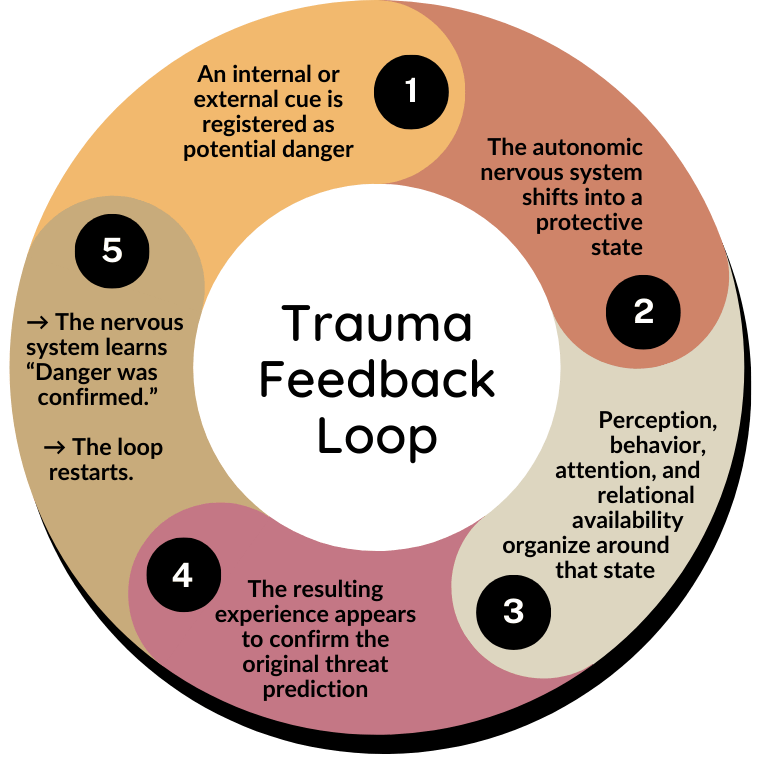
Part of PTSD is the loss of ability to feel connected to people who love you, well-described in Frankie’s relationship with Dr. Acevedo when she returned to Coronado. Dr. Acevedo did not need her. Rye “needed” her. That was the hook he had, that kept her coming back even when it was contrary to her values. That was the slippery slope that sent her into self-destructive addiction. Giving up herself, in order to feel needed.
The writer had to paint some reason for Frankie to want to be a hero so she pinned it on Rye, the lying cheat. But in real life, there are children who learn to survive by becoming the hero in the family. The kid who does the work that the impaired parents can’t do, the kid who gets attention only for what she does. No love for simply being a kid. To be valued, she has to turn into a little adult. A “parentalized child.” A hero, who is safe only when she is competent and needed.
Election Prep Books

Preparing for Fall OLLI classes at SSU, I read these two books to try to understand why the polls failed so catastrophically to predict the election of The Orange One in 2016, and how the effects of that were felt in the government agencies in Washington, D.C.
Seth Stephens-Davidowitz worked for one-and-a-half years as a data scientist at Google and his book explains the bias in polling why political polling is likely to become even more difficult to do well. He received his BA in philosophy, Phi Beta Kappa, from Stanford, and his PhD in economics from Harvard. Comparing what people search for, with what they tell another human they want, reveals that people try to hide their unacceptable desires which is why many told pollsters they were undecided in 2016 when in fact they gave in to their desire for entitlement and privilege. His examples range from sexual searches to baseball history and illustrate how “bias” creeps into sampling. Engrossing.
Michael Lewis writes so brilliantly about statistics. He recounts the effect of the failure of new Trump administration, in 2017, to fill the job openings at the top of many government agencies, most notably the Commerce Department. Lewis comments that the Commerce department isn’t really about business, it’s more the department of science and measurement, including NOAA, and managing nuclear waste. It reminded me of my trip to Morocco a year ago.
In Morocco, once a French colony, most of the road signs in Casablanca (the largest city) and in Rabat (where the French located the capital) were in both Arabic and French. As we got closer to the desert tribes in the East, French disappeared from the signs and they were in Arabic and Amazeigh, the recently-invented written Berber language which looks like a mashup of Greek and Korean letters. Until recently, these languages were unwritten. In public school, mandatory until 8th grade, only Arabic and Amazeigh are taught. French is not taught. The Roman alphabet is not taught. Only the wealthy, who go to private French schools, can read European books. The king of Morocco runs the public schools, and it is better for the monarchy if his subjects do not read European books.
This seems to be the underlying driver for dismantling the “deep state” bureaucracy which enforces the rules and standards across all administrations. The president can change every four years, but the Commerce Department rules are supposed to remain consistent for all citizens over time. These rules and those of the EPA grated against oil companies who wanted to roll back “the Chevron Rule” created by the Supreme Court which is the legal doctrine that the EPA knows more about environmental safety than congressional representatives do, so that when Congress empowers the EPA to regulate oil drilling, there is no need for Congress to pass a law over every single thing — the EPA can set standards. The “Chevron Rule” was rolled back this year by the Trump-packed Supreme Court.
Pete Buttigieg said that JD Vance, if elected, plans to march through government institutions looking for people with “woke” agendas and “de-bathify” the civil service. Fears are that this would enable corporations to maximize their profits as they ignore the safety of citizens. On the Jon Stewart Show, guest Mark Cuban pointed out that Trump’s father ran a family-owned real estate business which he bequeathed to his son. The son inherited the properties and Cuban asked Stewart, “how is running a family owned business different from running a kingdom?” Stewart’s eyes widened. “It’s not very different, is it?”