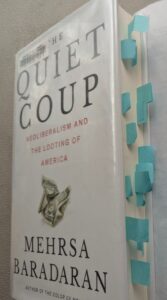
Interesting ideas flagged
The blue paper flags in The Quiet Coup mark jarring insights by Mehrsa Baradaran, a professor of law specializing in banking law at UC-Irvine. This searing indictment of the theory of “Law and Economics” is subtitled Neoliberalism and the Looting of America. Neoliberalism is a blanket term that describes
- market-driven,
- state-enabled
- deregulation that prioritizes
- capital mobility and
- privatization of commerce
- rather than prioritizing the public good.
The conclusion on page 349 points to the utter failure of the promises of neoliberalism:
- increased market competition
- more opportunity for all
- fewer taxes going to wasteful government spending
- and more liberty to pursue our own dreams
Money doesn’t Trickle Down — It Flows Up
In an unfettered market, capital multiplies. The rich get richer and the poor get poorer.
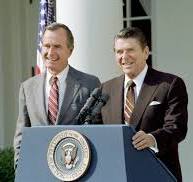
Reaganonomics
Supply-Side Economics
Voo-doo Economics
To combat the stagflation in 1980, presidential candidate Ronald Reagan touted “supply-side economics” promising that it would incentivize production and investment by deregulation, and lowering government spending and reducing taxes. George H.W. Bush correctly dismissed this as “voo-doo economics” because he understood that removing safeguards increased the “speed of greed.”
Regulations protect the citizens and small businesses upon which this economy is founded. Lowered government spending slowed growth. Reducing taxes on corporations increased the paychecks of CEOs but not the W-2 workers.
Trust is the Basis of Currency, Banking, and Society
Professor Baradaran points out that the value of any currency is simply that people believe it is worth something. Banking only works if people believe that they can get their money out when they want to. Social order is based on trust and it crumbles in riots. She says on p. 350
Neoliberalism taught us to distrust the state and one another… We are tyrannized by both a bloated government bureaucracy and a cannibalizing capital market: the guys who buy the guns, and the guys who sell them.
The past twenty years have shown us that humans are not the rational, self-interested decision-makers that Professor Milton Freidman claimed. Market behavior is not rational — it is driven by emotion. The strongest of these is the Trust/Distrust axis. On p. 351 she says,
We evolved as community builders, and our greatest feats have required groups of humans to work toward a common goal for long periods of time. Turning polarities into harmony — that is the magic of humanity. It is TRUST that is the vital force underlying both state and market. And corruption is the death knell of both.
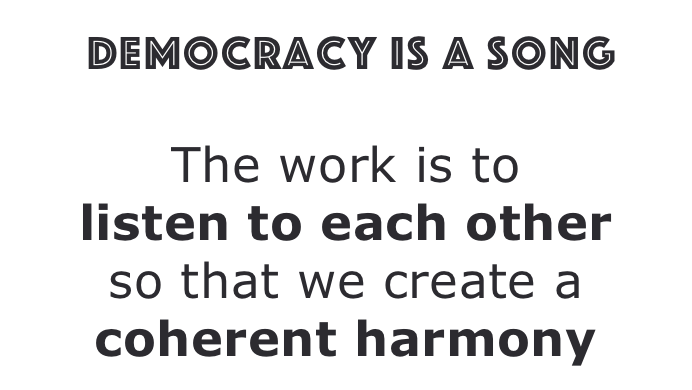
Harmony – What If Democracy Is a Song?
“Turning polarities into harmony — that is the magic of humanity.”
Since the runaway inflation of the 1980s turned into “stagflation,” the electorate has ping-ponged between candidates who promise lower taxes and regulation, and those who promise to tame greed, corruption and inequalities. I think Professor Baradaran is right, these are different notes to the symphony of democracy and it would make better sense to find a way to harmonize.
Neoliberalism is a zero-sum mentality stuck in 19th-century laisex-faire economic ideas. On p. 352 she points out that “Segregationists, wealthy heirs, big-oil and tobacco are trying to preserve an unjust world economic order.”
Can we find a way to harmonize creativity, ambition and greed with “the greatest good for the greatest number”? What if a robust economic system is not a balance or a paradox. What if it’s a harmony. Can we find a way to hear all the voices?
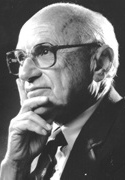
Milton Friedman
Other voices in the harmony are academics. For example, the Chicago School of Economics Nobel Prizewinner Milton Friedman seemed to sing “Nothing is as permanent as a temporary government program.” He believed government regulation slows financial growth. On p. 85 Professor Baradaran said, “Friedman was not alone in his crusade against corporate responsibility… Shareholder supremacy took hold of the Delaware courts over the next decades…”
Chairman of the Federal Reserve Alan Greenspan would sing “A free market is self-regulating and derivatives are trivial. Get rid of rules.” Famous for his inscrutable testimony, he believed that the self-interest of free markets and banks would adequately regulate them. When investment banks Bear Stearns and Lehman Brothers failed in 2008 and nearly brought down the world banking system, Chairman Greenspan famously admitted he was wrong. This was during a House Committee of Government Oversight and Reform hearing on October 23, 2008.
Greenspan and Friedman could have been right, back when investment banks they were run by partners who decided the risk and return of each investment. They were using their own money. After President Jimmy Carter deregulated banks, firms like Goldman Sachs went public in 1999. Now they were corporations instead of partnerships and they were investing the corporation’s money: other people’s money. They paid themselves fees, so transactions were rewarded and Mergers and Acquisitions exploded. Leverage borrowing was the fuel that burned down the markets in 2008.
There will always be the voices of the greedy seeking to unshackle themselves from the regulation that impedes their fleecing of investors.
Greenspan and Friedman did not take into account the greed of bankers who were no longer working in partnerships, who were no longer investing the partnerships’s money. To correct this after the 2008 crisis, the Dodd-Frank bill was signed in 2010 by President Obama to place safeguards in banking. It was partly repealed by President Trump in 2018.
I can’t help but wonder if some of this greed is stunted development. Psychologists tell us that before age 3 toddlers engage in side-by-side play rather than cooperative play. Toddlers are learning what belongs to them (“mine!”) and they lack the ability to understand what others want. They engage in side-by-side Parallel Play and might be encouraged to take turns during a game, but toddlers usually don’t understand sharing in the sense of giving up the toy and then getting the toy back later. Regulating markets has been one way of coping with this behavior in adults.
There is also the question of mild autism like Asperger’s, an inability to understand that others have needs and that society expects adults to help out those who have less. Elon Musk announced his Asperger’s on Saturday Night Live, and Bill Gates, now famous for his Epstein friendship, is also said to be Asperger’s. Alex Karp, co-founder of Palantir, said during a NYtimes panel that he has Asperger’s. This limitation affects their business decisions.
For the craving for money is the root of all sorts of evils. [1 Timothy 6:10 New Testament]
Radix malorum est cupiditas The root of evil is cupiditas -> greed
The Law of Unexpected Consequences
Ralph Nader unwittingly set the groundwork for Citizens United
In 1976, Ralph Nader won a consumer rights case before the Supreme Court which established First Amendment protection for commercial speech by ruling that Virginia’s ban on advertising prescription drug prices was unconstitutional. It upheld Ralph Nader’s contention that the free flow of commercial information is vital to the public. Virginia State Board of Pharmacy v. Virginia Citizens Consumer Council, Inc. This was the change of precedent that led to the travesty of Citizens United in 2010.
Citizens United v. Federal Election Commission held that the First Amendment prohibits the government from restricting independent political expenditures by corporations, unions, and associations. Corporate lawyer Lewis Powell sent a memo in 1971 to a friend who was the chairman of the U.S. Chamber of Commerce. Titled “Attack on American Free Enterprise Systems” it was “full of practical strategies covering a range pf issues, making it one of the most significant documents of the neoliberal revolution in America” p. 85. This was part of the formation of the Federalist Society, covered in Chapter Five, with founding members from the Olin Corporation and industries most threatened by changing markets: big oil, tobacco and weapons.
Lewis Powell went on to become a member of the Supreme Court and was a leader in shifting the decisions from what was best for the people to what was best for the corporations and markets. He was proud of his achievement of keeping black children out of white classrooms in Virginia — de facto segregation.
The Paradox of TIAA-CREF
TIAA-CREF is the leading financial advisor for more than five million teachers, firefighters, police officers, hospital workers, college professors, and people who walk across a variety of public sector jobs. The five million people are part of the disappearing middle class whose jobs and lives have been eroded by the efficiency-minded logic of the financialized neoliberal economy.
TIAA-CREF is a big capital reservoir of middle-class pensions that is invested like any other Wall Street portfolio: maximize returns. Worker’s retirement savings were fed into the same financialized market that squeezed empathy out of hospitals and turned them into businesses. On p. 349 Professor Baradaran says, “Neoliberalism’s trick was to enable a privileged few to cheat the market, loot our shared resources, and seize the ladders of opportunity.” The market is neither Divine nor Evil; it is an algorithm designed to maximize return-on-investment, making the rich richer and the poor poorer.
Integrity is Expensive but it is Not a Luxury
At the Munich Security Conference in February 2026, Representative Alexandria Ocasio-Cortez spoke about the intersection of economic inequality and the rise of far-right populism. She challenged the elite, pro-establishment conference attendees, arguing that runaway inequality fuels far-right populist movements. The security of the individual erodes as power and wealth become increasingly unequal. One threat is the power of surveillance as it becomes concentrated in fewer entities, often corporations like Palantir rather than elected governments.
On page 359 Professor Baradaran states:
I now believe that for those of us fighting for economic justice, it is time to look toward the MARKETS for solutions, because now money has more rights than voters,
and corporations have more power more than governments…The neoliberal coalition did not want trade on fair terms, so they rigged the game.
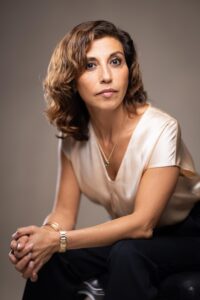
Mehrsa Baradaran
Professor Baradaran contends that the neoliberal push to turn people into “entrepreneurs of themselves” is deluded and serves commerce rather than society. To insist that every American is solely responsible for their own success or failure is delusional. As a society, we must do more to provide education to anyone eager to study because a robust democracy is stabilized by voters who are able to think and who can make the effort to understand the many sides of complex issues.
Mehrsa Baradaran was born in Iran where her mother was imprisoned for political protest. Upon her mother’s release, they emigrated to the US when Mehrsa was about 8 years old.